Free Genetics Notes PDF for BSc Nursing Students
Download Complete Genetics Notes for BSc Nursing
Are you searching for Free Genetics Notes PDF for BSc Nursing Students? These comprehensive study notes are specially prepared to help nursing students understand the fundamental principles of genetics, hereditary disorders, chromosomal abnormalities, genetic counseling, and the practical applications of genetics in healthcare.
Genetics is an important subject in the BSc Nursing curriculum because it helps students understand how traits and diseases are inherited, how genetic disorders develop, and how nurses can support patients and families through education, screening, prevention, and counseling. A strong foundation in genetics enables nursing professionals to provide evidence-based, patient-centered care in modern healthcare settings.
These notes are organized in a simple, easy-to-understand, and examination-oriented format suitable for university exams, viva examinations, assignments, and competitive nursing examinations.
What is Genetics?
Genetics is the branch of biology that studies heredity and variation among living organisms. It explains how characteristics are passed from parents to offspring through genes and chromosomes.
Genes contain genetic information that controls physical appearance, growth, development, metabolism, and many biological functions. The study of genetics helps healthcare professionals understand inherited diseases, congenital abnormalities, and the role of genes in health and disease.
Importance of Genetics in Nursing
Genetics has become an essential component of modern nursing practice. Nurses frequently encounter patients and families affected by genetic conditions and require knowledge to provide appropriate care and support.
Genetics helps nurses to:
- Identify inherited disorders
- Assess family health history
- Recognize genetic risk factors
- Participate in prenatal screening programs
- Provide genetic education
- Support genetic counseling services
- Promote disease prevention
- Improve patient outcomes
- Assist in family planning decisions
- Deliver holistic healthcare
Learning Objectives of Genetics
After studying genetics, nursing students will be able to:
- Define basic genetic concepts
- Explain chromosome structure and function
- Describe DNA and RNA
- Understand inheritance patterns
- Identify genetic disorders
- Explain chromosomal abnormalities
- Discuss prenatal diagnostic procedures
- Describe genetic counseling
- Understand gene therapy applications
- Apply genetics in nursing practice
Basic Terminology in Genetics
Gene
A gene is the basic unit of heredity located on chromosomes. It carries instructions for producing proteins and controlling specific traits.
Chromosome
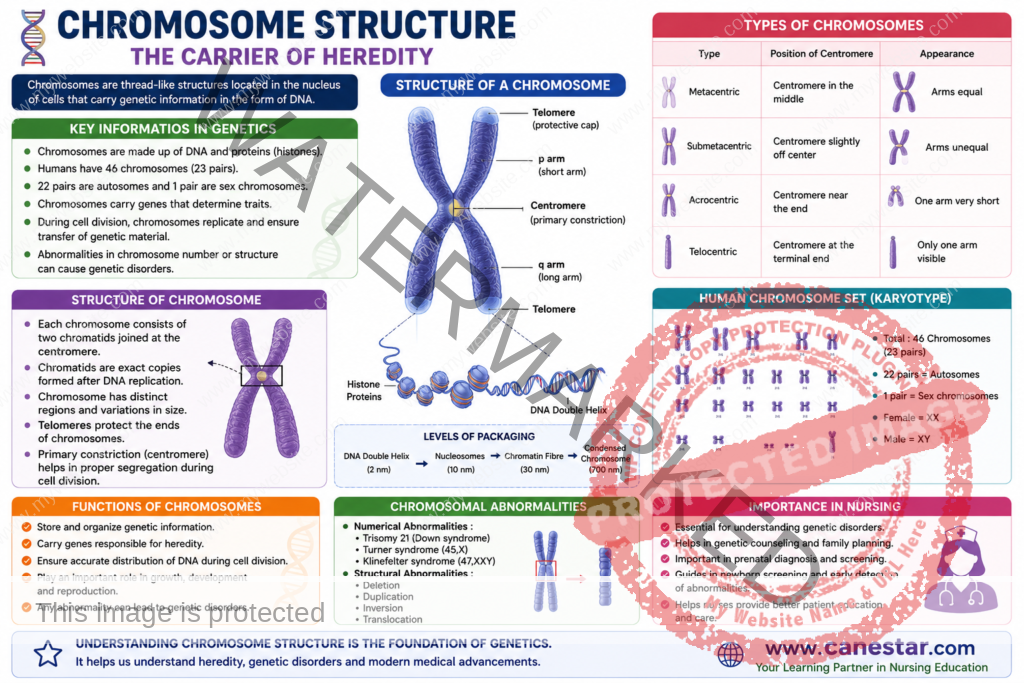
Chromosomes are thread-like structures found inside the nucleus of cells that contain genetic information.
DNA
Deoxyribonucleic Acid (DNA) is the molecule that stores genetic information in living organisms.
RNA
Ribonucleic Acid (RNA) helps in protein synthesis by carrying genetic instructions from DNA.
Genome
The genome is the complete set of genetic material present in an organism.
Mutation
A mutation is a permanent change in the DNA sequence that may affect gene function.
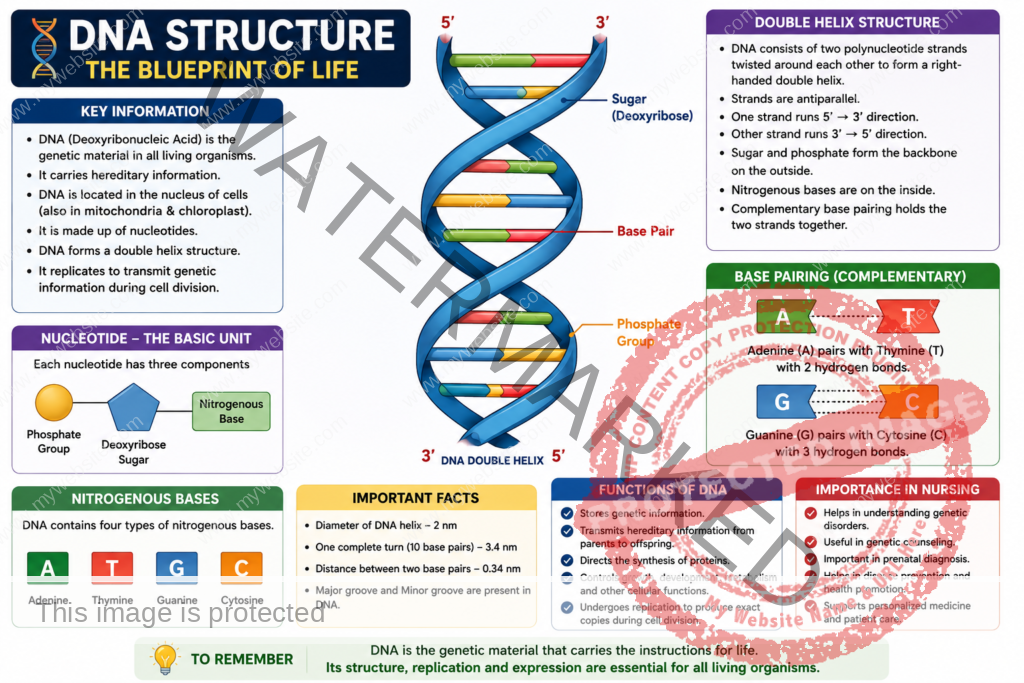
Structure of DNA
DNA consists of:
- Two polynucleotide strands
- Nitrogenous bases
- Sugar molecules
- Phosphate groups
Nitrogenous Bases
- Adenine (A)
- Thymine (T)
- Guanine (G)
- Cytosine (C)
Base Pairing
- A pairs with T
- G pairs with C
The double-helix structure of DNA enables storage and transmission of genetic information.
Chromosomes and Human Karyotype
Humans normally possess:
- 46 chromosomes
- 23 pairs of chromosomes
Chromosome Classification
Autosomes
- 22 pairs
- Control body characteristics
Sex Chromosomes
- 1 pair
- Determine gender
Male = XY
Female = XX
Cell Division
Mitosis
Mitosis produces two identical daughter cells and is responsible for growth, repair, and replacement of tissues.
Stages of Mitosis
- Prophase
- Metaphase
- Anaphase
- Telophase
Meiosis
Meiosis produces reproductive cells (gametes) containing half the number of chromosomes.
Importance
- Maintains chromosome number
- Produces genetic variation
- Essential for reproduction
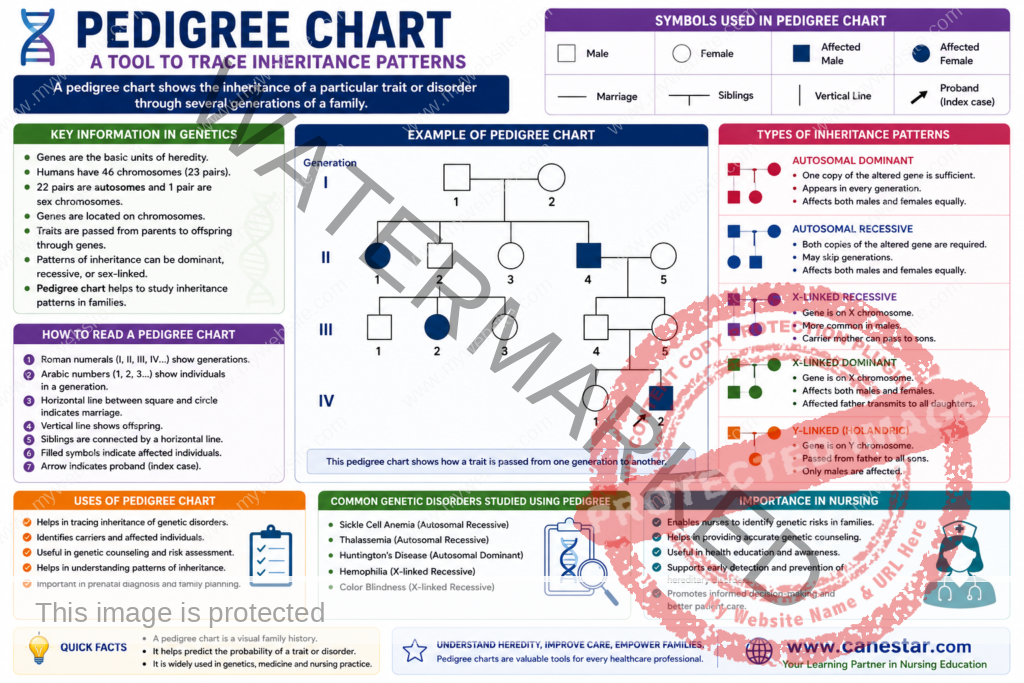
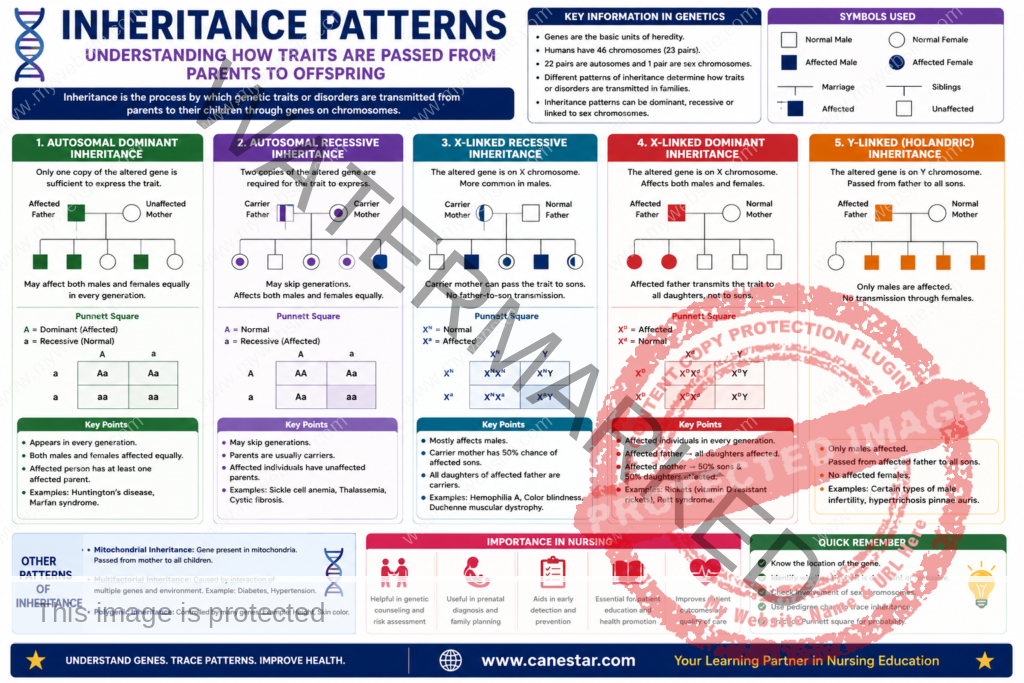
Patterns of Inheritance
Inheritance patterns explain how traits are transmitted from parents to offspring.
Autosomal Dominant Inheritance
Characteristics:
- Only one abnormal gene required
- Appears in every generation
- Affects males and females equally
Examples:
- Huntington Disease
- Marfan Syndrome
- Achondroplasia
Autosomal Recessive Inheritance
Characteristics:
- Two abnormal genes required
- Parents usually carriers
- Males and females equally affected
Examples:
- Sickle Cell Disease
- Cystic Fibrosis
- Phenylketonuria
- Thalassemia
X-Linked Inheritance
Characteristics:
- Gene located on X chromosome
- Males affected more frequently
Examples:
- Hemophilia
- Duchenne Muscular Dystrophy
- Color Blindness
Y-Linked Inheritance
Characteristics:
- Passed from father to son
- Only males affected
Examples:
- Certain male infertility conditions
Chromosomal Disorders
Chromosomal abnormalities occur due to changes in chromosome number or structure.
Down Syndrome (Trisomy 21)
Cause
Presence of an extra chromosome 21.
Features
- Intellectual disability
- Flat facial profile
- Short stature
- Congenital heart defects
- Delayed development
Nursing Care
- Developmental support
- Family education
- Health monitoring
- Early intervention services
Turner Syndrome
Cause
Missing one X chromosome in females.
Features
- Short stature
- Delayed puberty
- Infertility
- Ovarian dysfunction
Nursing Management
- Growth monitoring
- Hormonal therapy support
- Psychological counseling
Klinefelter Syndrome
Cause
Extra X chromosome in males (47,XXY).
Features
- Tall stature
- Infertility
- Reduced testosterone
- Gynecomastia
Nursing Care
- Emotional support
- Endocrine management
- Health education
Cri-du-chat Syndrome
Cause
Deletion of chromosome 5.
Features
- High-pitched cry
- Developmental delay
- Intellectual disability
- Facial abnormalities
Common Genetic Disorders
Sickle Cell Disease
A hereditary blood disorder characterized by abnormal hemoglobin formation.
Symptoms
- Anemia
- Pain crises
- Fatigue
- Recurrent infections
Nursing Care
- Hydration
- Pain management
- Oxygen therapy
- Infection prevention
Thalassemia
Inherited disorder affecting hemoglobin production.
Symptoms
- Severe anemia
- Growth retardation
- Weakness
- Splenomegaly
Management
- Blood transfusion
- Iron chelation therapy
- Nutritional support
Hemophilia
Inherited bleeding disorder caused by clotting factor deficiency.
Symptoms
- Excessive bleeding
- Joint hemorrhage
- Bruising
Nursing Management
- Prevent injury
- Administer clotting factors
- Patient education
Cystic Fibrosis
Genetic disorder affecting lungs and digestive system.
Symptoms
- Thick mucus production
- Respiratory infections
- Malabsorption
Nursing Care
- Airway clearance
- Nutritional support
- Medication administration
Prenatal Diagnosis
Prenatal diagnosis helps detect genetic abnormalities before birth.
Common Methods
Amniocentesis
Analysis of amniotic fluid to identify chromosomal abnormalities.
Chorionic Villus Sampling
Examination of placental tissue for genetic disorders.
Ultrasound Examination
Detection of fetal abnormalities.
Maternal Serum Screening
Assessment of risk for chromosomal disorders.
Non-Invasive Prenatal Testing
Blood-based screening using fetal DNA.
Genetic Counseling
Genetic counseling helps individuals and families understand inherited disorders and genetic risks.
Goals
- Provide information
- Assess risk
- Support decision-making
- Promote informed choices
Role of Nurses
- Patient education
- Emotional support
- Family assessment
- Referral services
- Documentation
- Communication assistance
Human Genome Project
The Human Genome Project was an international scientific research initiative aimed at identifying and mapping all human genes.
Objectives
- Sequence human DNA
- Identify all genes
- Improve disease diagnosis
- Advance personalized medicine
Benefits
- Better disease understanding
- Improved diagnostics
- Development of targeted therapies
- Enhanced preventive healthcare
Gene Therapy
Gene therapy involves modifying genes to treat or prevent diseases.
Applications
- Inherited disorders
- Certain cancers
- Immune deficiencies
- Rare genetic diseases
Benefits
- Targets disease causes
- Potential long-term treatment
- Improved patient outcomes
Practical Applications of Genetics in Nursing
Genetics is used in:
- Family history assessment
- Prenatal care
- Newborn screening
- Cancer risk assessment
- Genetic counseling
- Personalized medicine
- Disease prevention programs
- Community health services
Common Examination Questions for Genetics Paper
Long Answer Questions
- Explain the practical applications of genetics in nursing.
- Describe chromosome structure and function.
- Discuss patterns of inheritance.
- Explain genetic counseling and the nurse’s role.
- Write about prenatal diagnostic procedures.
- Describe Down Syndrome and nursing management.
Short Notes
- DNA structure
- Mutation
- Human Genome Project
- Turner Syndrome
- Klinefelter Syndrome
- Hemophilia
- Gene therapy
- Prenatal diagnosis
Very Short Questions
- Define gene.
- Define chromosome.
- What is mutation?
- What is genome?
- Define genetic counseling.
- What is trisomy?
- What is DNA?
- What is amniocentesis?
Tips to Score High in Genetics
- Learn definitions thoroughly.
- Practice chromosome diagrams.
- Memorize inheritance patterns.
- Revise chromosomal disorders regularly.
- Study prenatal diagnostic procedures carefully.
- Focus on nursing implications.
- Solve previous examination papers.
- Use flowcharts and diagrams.
- Revise important short notes frequently.
- Practice answering long questions systematically.
Frequently Asked Questions (FAQs)
What is genetics?
Genetics is the study of heredity and the transmission of traits from parents to offspring through genes.
Why is genetics important in nursing?
Genetics helps nurses identify inherited disorders, educate patients, participate in genetic counseling, and provide evidence-based care.
What are chromosomes?
Chromosomes are structures inside the nucleus that contain genetic information in the form of DNA.
What is genetic counseling?
Genetic counseling is a process that helps individuals and families understand genetic risks and make informed healthcare decisions.
What is the Human Genome Project?
The Human Genome Project was an international effort to identify and map all human genes and understand their functions.
Are these genetics notes useful for BSc Nursing examinations?
Yes. These notes cover important syllabus topics, examination questions, nursing implications, and revision materials useful for university examinations and competitive nursing exams.
Download Free Genetics Notes PDF
These Free Genetics Notes for BSc Nursing Students provide comprehensive coverage of genetics concepts, inheritance patterns, genetic disorders, prenatal diagnosis, genetic counseling, and nursing applications. They are ideal for examination preparation, classroom learning, assignments, and clinical practice.
Start learning genetics today and strengthen your nursing knowledge with comprehensive, exam-focused study notes.