Free UK NMC CBT Practice Questions for International Nurses
Preparing for the UK Nursing NMC CBT Exam? Practicing realistic CBT-style questions is one of the best ways to improve your confidence and identify areas that need further study.
The NMC CBT (Computer-Based Test) assesses the knowledge, skills, and professional judgment required for safe nursing practice in the United Kingdom. Questions commonly cover patient safety, professional values, communication, medication management, infection control, safeguarding, and clinical decision-making.
This free practice test contains sample UK NMC CBT MCQs with answers and explanations.
UK NMC CBT Questions, NMC CBT Mock Test, UK Nursing Exam Questions, NMC CBT Practice Questions, UK Nurse Registration Exam, NMC CBT Study Material, NMC CBT MCQ with Answers.
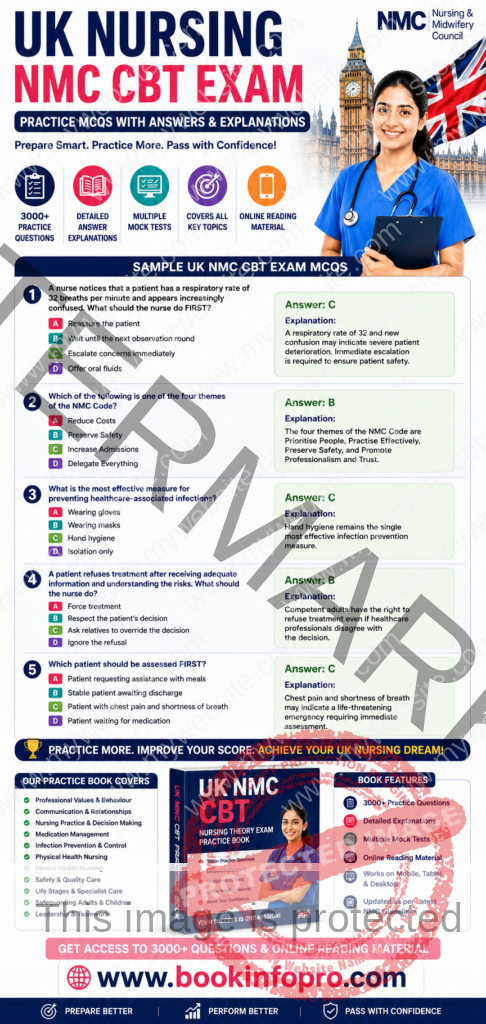
Question 1
A nurse notices that a patient has a respiratory rate of 32 breaths per minute and appears increasingly confused. What should the nurse do FIRST?
A. Reassure the patient
B. Wait until the next observation round
C. Escalate concerns immediately
D. Offer oral fluids
Answer: C
Explanation: A respiratory rate of 32 and new confusion may indicate severe patient deterioration. Immediate escalation is required to ensure patient safety.
Question 2
Which of the following is one of the four themes of the NMC Code?
A. Reduce Costs
B. Preserve Safety
C. Increase Admissions
D. Delegate Everything
Answer: B
Explanation: The four themes of the NMC Code are Prioritise People, Practise Effectively, Preserve Safety, and Promote Professionalism and Trust.
Question 3
What is the most effective measure for preventing healthcare-associated infections?
A. Wearing gloves
B. Wearing masks
C. Hand hygiene
D. Isolation only
Answer: C
Explanation: Hand hygiene remains the single most effective infection prevention measure.
Question 4
A patient refuses treatment after receiving adequate information and understanding the risks. What should the nurse do?
A. Force treatment
B. Respect the patient’s decision
C. Ask relatives to override the decision
D. Ignore the refusal
Answer: B
Explanation: Competent adults have the right to refuse treatment even if healthcare professionals disagree with the decision.
Question 5
Which patient should be assessed FIRST?
A. Patient requesting assistance with meals
B. Stable patient awaiting discharge
C. Patient with chest pain and shortness of breath
D. Patient waiting for medication
Answer: C
Explanation: Chest pain and shortness of breath may indicate a life-threatening emergency requiring immediate assessment.
Question 6
Which medication is considered high risk?
A. Saline nasal spray
B. Insulin
C. Lip balm
D. Artificial tears
Answer: B
Explanation: Insulin errors can result in serious patient harm and therefore require extra precautions.
Question 7
A patient develops sudden facial drooping and slurred speech. What should the nurse suspect?
A. Migraine
B. Stroke
C. Gastritis
D. Arthritis
Answer: B
Explanation: Facial drooping and slurred speech are classic signs of stroke requiring urgent intervention.
Question 8
Which action best demonstrates patient advocacy?
A. Ignoring concerns
B. Speaking up for patient rights
C. Delaying treatment
D. Avoiding communication
Answer: B
Explanation: Advocacy involves protecting and promoting the interests and rights of patients.
Question 9
What is the purpose of NEWS2?
A. Staff scheduling
B. Financial planning
C. Early recognition of patient deterioration
D. Discharge planning
Answer: C
Explanation: NEWS2 helps healthcare professionals identify and respond to patient deterioration promptly.
Question 10
A patient receiving opioid medication becomes drowsy. What assessment is the highest priority?
A. Respiratory rate
B. Hair colour
C. Weight
D. Height
Answer: A
Explanation: Opioids may cause respiratory depression, making respiratory assessment essential.
Question 11
Which patient is most at risk of pressure ulcers?
A. Healthy athlete
B. Bed-bound elderly patient
C. School student
D. Office worker
Answer: B
Explanation: Immobility significantly increases pressure ulcer risk.
Question 12
What should a nurse do after discovering a medication error?
A. Hide the incident
B. Report and document it immediately
C. Alter the records
D. Wait until the next shift
Answer: B
Explanation: Prompt reporting promotes patient safety and complies with professional standards.
Question 13
Which finding may suggest sepsis?
A. Increased respiratory rate and confusion
B. Normal observations
C. Healthy appetite
D. Normal mobility
Answer: A
Explanation: Early sepsis indicators include tachypnea, confusion, and physiological deterioration.
Question 14
What is the normal oxygen saturation range for most adults?
A. 60–70%
B. 70–80%
C. 94–98%
D. 80–85%
Answer: C
Explanation: Most adults should maintain oxygen saturation between 94–98%.
Question 15
Which action supports confidentiality?
A. Discussing patients in public areas
B. Sharing information with unauthorized persons
C. Sharing information only when clinically necessary
D. Posting patient details online
Answer: C
Explanation: Confidential information should only be shared appropriately and when necessary for patient care.
Why Practice UK NMC CBT Questions?
Regular CBT practice helps:
- Improve clinical reasoning
- Strengthen decision-making skills
- Build confidence
- Identify weak areas
- Improve exam performance
- Familiarize candidates with CBT-style questions
UK NMC CBT Nursing Theory Exam Practice Book
Looking for more comprehensive preparation?
Our UK NMC CBT Nursing Theory Exam Practice Book includes:
✔ 3000+ Practice Questions
✔ Detailed Answer Explanations
✔ Clinical Scenario-Based MCQs
✔ Professional Issues
✔ Medication Safety
✔ Infection Prevention and Control
✔ Safeguarding
✔ Mock Tests
✔ Online Reading Material
✔ Mobile, Tablet and Desktop Access
Visit:
and access the UK NMC CBT Nursing Theory Exam Practice Book designed specifically for international nurses preparing for UK registration.
Final Thoughts
Success in the UK NMC CBT Exam depends on consistent preparation, understanding nursing concepts, and practicing realistic exam-style questions. Continue strengthening your clinical reasoning and patient safety knowledge through regular practice and mock tests.
The more questions you practice, the more confident and prepared you will be on exam day.