
Free Pathology II Notes PDF for BSc Nursing Students
Complete Pathology II Study Notes for BSc Nursing
Are you looking for Free Pathology II Notes PDF for BSc Nursing Students? These comprehensive notes are designed to help nursing students understand disease processes, pathological changes, diagnostic investigations, and clinical correlations in a simple and examination-oriented manner.
Pathology II is an essential subject in nursing education that focuses on systemic diseases affecting different organs and body systems. Understanding pathology enables nursing students to recognize disease manifestations, support diagnostic procedures, provide effective patient care, and participate in disease prevention programs.
These notes cover important concepts, definitions, pathophysiology, clinical features, diagnostic tests, complications, nursing implications, diagrams, and frequently asked examination questions.
What is Pathology?
Pathology is the branch of medical science that studies diseases, their causes, mechanisms, structural changes, and effects on the body.
Pathology helps healthcare professionals understand:
- Disease causation
- Cellular injury
- Inflammation
- Healing processes
- Organ dysfunction
- Disease progression
- Diagnostic findings
- Clinical manifestations
A strong understanding of pathology forms the foundation for safe nursing practice and patient management.

Importance of Pathology in Nursing
Pathology knowledge helps nurses:
- Understand disease mechanisms
- Recognize signs and symptoms early
- Assist in diagnosis and treatment
- Monitor disease progression
- Educate patients and families
- Prevent complications
- Improve patient outcomes
- Deliver evidence-based nursing care
Pathology is closely related to medicine, surgery, pharmacology, and nursing practice.
Learning Objectives
After studying Pathology II, students should be able to:
- Explain disease mechanisms
- Describe pathological changes in organs
- Identify risk factors for diseases
- Recognize clinical manifestations
- Interpret laboratory investigations
- Understand disease complications
- Apply pathology knowledge in nursing care
- Participate in disease prevention programs
Cardiovascular System Disorders
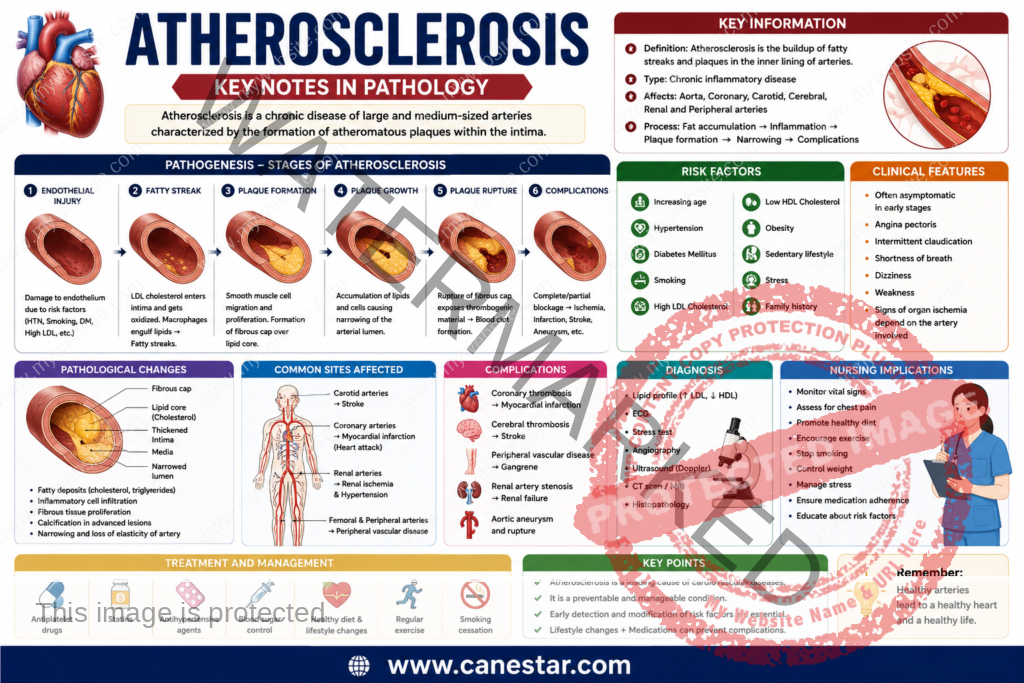
Atherosclerosis
A chronic disease characterized by plaque formation within arterial walls.
Risk Factors
- Hypertension
- Smoking
- Diabetes mellitus
- Hyperlipidemia
- Obesity
- Sedentary lifestyle
Clinical Features
- Chest pain
- Reduced blood flow
- Myocardial infarction
- Stroke
Nursing Implications
- Monitor blood pressure
- Promote healthy lifestyle changes
- Educate regarding risk factor modification
Hypertension
Persistent elevation of blood pressure above normal levels.
Causes
- Genetic factors
- Obesity
- Excess salt intake
- Stress
- Kidney disease
Complications
- Stroke
- Heart failure
- Kidney damage
- Retinopathy
Respiratory System Disorders
Pneumonia
Inflammation of lung tissue caused by microorganisms.
Symptoms
- Fever
- Cough
- Dyspnea
- Chest pain
- Sputum production
Diagnostic Tests
- Chest X-ray
- Sputum examination
- Blood investigations
Nursing Care
- Monitor respiratory status
- Encourage hydration
- Administer prescribed medications
Chronic Obstructive Pulmonary Disease (COPD)
Progressive airflow limitation associated with chronic bronchitis and emphysema.
Risk Factors
- Smoking
- Air pollution
- Occupational exposure
Symptoms
- Chronic cough
- Dyspnea
- Wheezing
Gastrointestinal Disorders
Peptic Ulcer Disease
Ulcer formation in the stomach or duodenum.
Causes
- Helicobacter pylori infection
- NSAID use
- Smoking
- Stress
Symptoms
- Epigastric pain
- Nausea
- Vomiting
- Gastrointestinal bleeding
Cirrhosis of Liver
Chronic liver disease characterized by fibrosis and liver dysfunction.
Causes
- Alcohol abuse
- Viral hepatitis
- Fatty liver disease
Complications
- Ascites
- Portal hypertension
- Hepatic encephalopathy
Endocrine Disorders
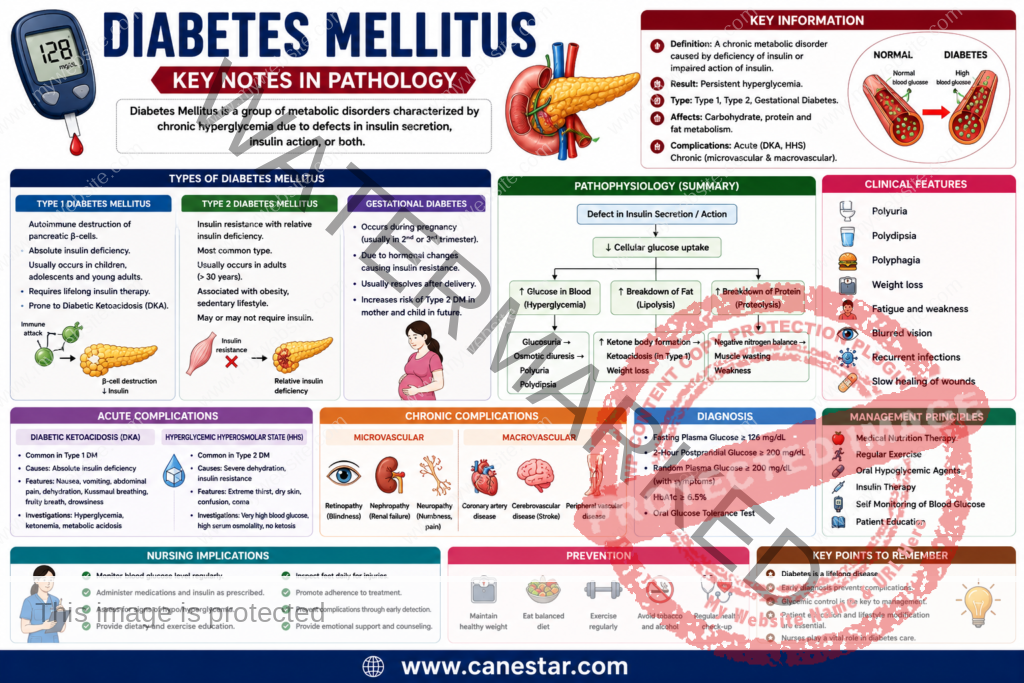
Diabetes Mellitus
A metabolic disorder characterized by elevated blood glucose levels.
Types
- Type 1 Diabetes
- Type 2 Diabetes
- Gestational Diabetes
Symptoms
- Polyuria
- Polydipsia
- Polyphagia
- Weight loss
Complications
- Neuropathy
- Nephropathy
- Retinopathy
- Cardiovascular disease
Thyroid Disorders
Hyperthyroidism
Excess thyroid hormone production.
Symptoms
- Weight loss
- Palpitations
- Heat intolerance
- Anxiety
Hypothyroidism
Reduced thyroid hormone production.
Symptoms
- Weight gain
- Fatigue
- Cold intolerance
- Dry skin
Renal Disorders
Acute Kidney Injury
Sudden decline in kidney function.
Causes
- Severe dehydration
- Shock
- Nephrotoxic drugs
- Infection
Clinical Features
- Reduced urine output
- Fluid retention
- Electrolyte imbalance
Chronic Kidney Disease
Progressive and irreversible loss of kidney function.
Risk Factors
- Diabetes mellitus
- Hypertension
- Chronic glomerulonephritis
Complications
- Anemia
- Hypertension
- Renal failure
Hematological Disorders
Anemia
Reduction in hemoglobin concentration or red blood cells.
Types
- Iron deficiency anemia
- Megaloblastic anemia
- Hemolytic anemia
- Aplastic anemia
Symptoms
- Fatigue
- Weakness
- Pallor
- Shortness of breath
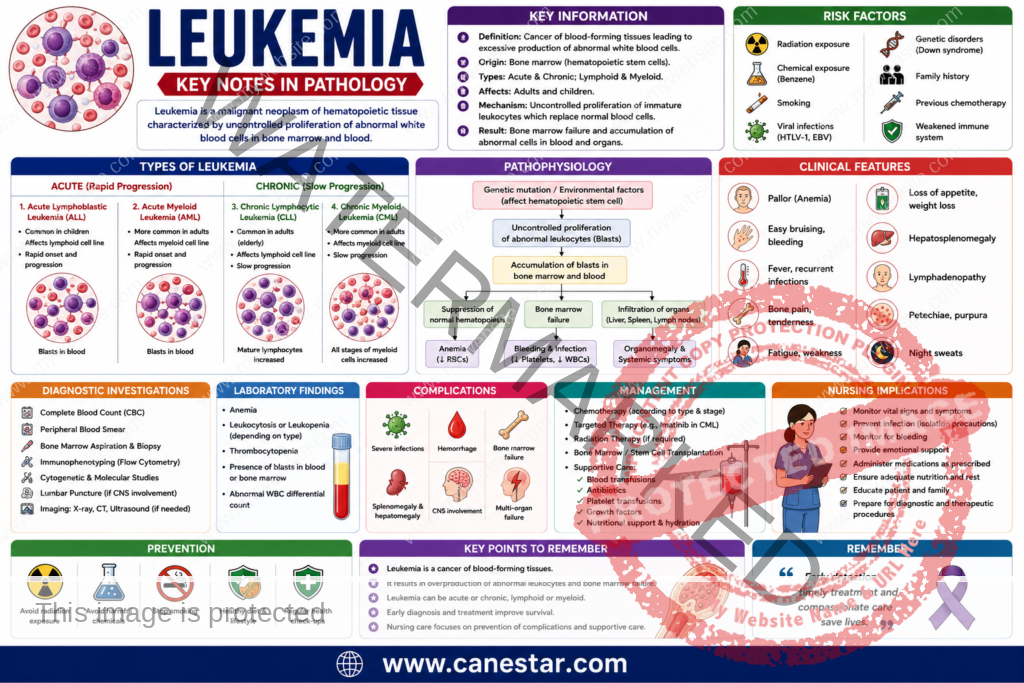
Leukemia
Cancer affecting blood-forming tissues.
Clinical Features
- Fever
- Bleeding
- Recurrent infections
- Lymph node enlargement
Neurological Disorders
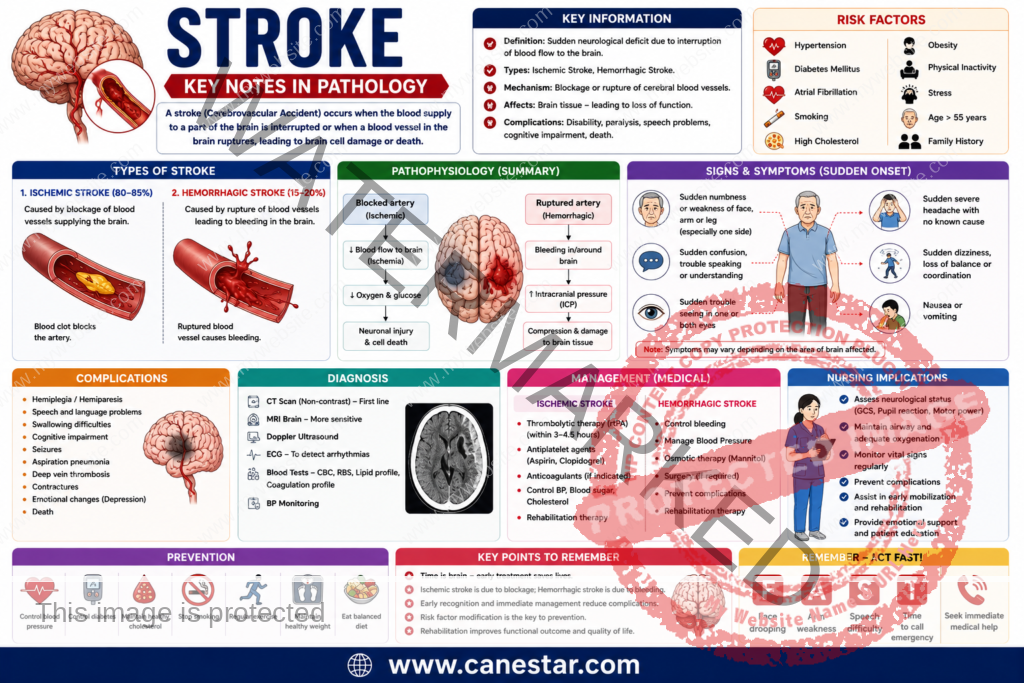
Stroke
Interruption of blood supply to the brain.
Types
- Ischemic stroke
- Hemorrhagic stroke
Symptoms
- Facial drooping
- Weakness
- Speech difficulty
- Loss of consciousness
Nursing Care
- Neurological assessment
- Airway maintenance
- Rehabilitation support
Neoplasia and Cancer
Characteristics of Malignant Tumors
- Rapid growth
- Invasion of surrounding tissues
- Metastasis
- Cellular atypia
Risk Factors
- Tobacco use
- Radiation exposure
- Genetic predisposition
- Viral infections
Warning Signs of Cancer
- Unexplained weight loss
- Persistent cough
- Abnormal bleeding
- Non-healing ulcers
Common Diagnostic Investigations
Students should understand the significance of:
- Complete blood count (CBC)
- Urinalysis
- Liver function tests
- Kidney function tests
- Blood glucose testing
- Chest X-ray
- CT scan
- MRI
- Biopsy
- Histopathological examination
Frequently Asked Examination Questions
Long Essay Questions
- Explain atherosclerosis and its complications.
- Discuss diabetes mellitus and pathological changes.
- Describe cirrhosis of liver.
- Explain pneumonia and pathological manifestations.
- Discuss leukemia and diagnostic investigations.
Short Notes
- Hypertension
- COPD
- Peptic ulcer
- Acute kidney injury
- Anemia
- Stroke
- Hypothyroidism
- Hyperthyroidism
Very Short Questions
- Define pathology.
- Define neoplasia.
- Define metastasis.
- Define anemia.
- Define inflammation.
- Define necrosis.
- Define diabetes mellitus.
- Define cirrhosis.
Examination Preparation Tips
- Learn important definitions thoroughly.
- Practice diagrams and flowcharts.
- Focus on disease causes and pathogenesis.
- Understand complications and clinical features.
- Revise frequently asked questions regularly.
- Use mnemonics for difficult topics.
- Study laboratory investigations carefully.
- Practice previous university question papers.
Frequently Asked Questions (FAQs)
What is Pathology II in BSc Nursing?
Pathology II is a nursing subject that focuses on systemic diseases, their causes, pathological changes, clinical manifestations, and diagnostic investigations.
Are these notes useful for examinations?
Yes. These notes are designed according to common nursing university examination patterns and important syllabus topics.
Which topics are most important?
Cardiovascular disorders, respiratory diseases, diabetes mellitus, renal disorders, anemia, leukemia, stroke, and neoplasia are among the most frequently asked topics.
Are these notes suitable for quick revision?
Yes. The notes are organized in a concise format suitable for both detailed study and examination revision.
Why is pathology important for nurses?
Pathology helps nurses understand disease mechanisms, monitor patients effectively, identify complications, and provide evidence-based care.